How to Create a Working Monthly Budget (Step-by-Step Guide + Free Printable)
Master your money with our step-by-step guide to creating a monthly budget. Learn how to track expenses, set spending limits, and use our free printable planner to achieve financial freedom.

Learn how to create a monthly budget that actually works! This easy step-by-step guide, along with free printable worksheets, will help you track your expenses, save cash, and achieve financial success.
Introduction: Why Budgeting Is the First Step to Financial Freedom
Are your dollars disappearing before the month is over? You're not alone. Many people struggle with balancing income and expenses due to a lack of a clear monthly budget. But budgeting isn't about deprivation — it's about freedom and control.
When you know precisely where your dollars are going, you can save more, eliminate debt, and achieve your financial goals. In this tutorial, we'll guide you step-by-step through the process of building a budget that works for you — plus, we’ll give you a free printable budget planner to make it easy!
Step 1: Know Your "Why"
Before you dive into numbers, take a moment to think about your financial goals:
- What do you want your money to do?
- Are you saving for a house, college, or a trip?
- Do you want to become debt-free?
Understanding your "why" will keep you motivated when budgeting gets tough. Having an end goal in mind will help you stay on track even when life gets hectic.
Tip: Write down your top 3 money priorities at the top of your budget sheet or printable planner. This will help remind you of your goals when budgeting feels challenging.
Step 2: Determine Your Monthly Income
Now, calculate your total monthly income — the amount you bring home after taxes. Include:
- Salary or wages
- Side hustle money
- Rental or investment income
Add up all these figures to determine your total available income for the month.
Pro Tip: If your income varies each month, use a 3-month average to get a realistic estimate.
Step 3: Record Your Monthly Expenses
Next, list all your monthly expenses and divide them into two categories:
1. Fixed Expenses (same amount every month)
- Rent or mortgage
- Utility bills
- Insurance
- Internet or subscriptions
2. Variable Expenses (change month-to-month)
- Groceries
- Transportation
- Entertainment
- Shopping
- Eating out
Be truthful here — this step will show you where your money really goes and help identify areas where you can cut back.
Pro Tip: Review your last 2–3 bank statements to uncover hidden costs like subscriptions or small online purchases.
Step 4: Subtract Expenses from Income
This is the core of your budget. Use this simple formula:
Total Income – Total Expenses = Balance
- If your balance is positive, great! This is your potential savings or debt repayment amount.
- If your balance is negative, you’re spending more than you’re earning, and you’ll need to adjust.
Pro Tip: Your goal is to make every dollar work for you — for spending, saving, or investing.
Step 5: Set Spending Limits and Stick with Them

Once you know where your money is going, it’s time to set spending limits for each category.
| Category | Monthly Limit |
| Rent | $800 |
| Food | $300 |
| Transport | $100 |
| Entertainment | $75 |
| Savings | $200 |
Use your free printable budget worksheet to track these limits and stay on top of your spending.
Pro Tip: Try the "50/30/20 Rule" as a simple guideline:
- 50% for needs (essential expenses)
- 30% for wants (non-essentials)
- 20% for savings or debt repayment
Step 6: Record Your Spending Daily or Weekly
Budgeting doesn’t stop once you’ve written down your figures. You need to track your spending regularly to stay on course. You can use:
- A basic notebook or printable budget tracker
- A spreadsheet (Google Sheets or Excel)
- A free budgeting app (like Mint, YNAB, or PocketGuard)
Pro Tip: Set aside 10 minutes each Sunday for a "money check" to review your progress. This small habit can make a big difference in keeping your finances in check.
Step 7: Make a Savings Plan
Your budget should include saving, even if it's just a small amount. Start with emergency savings (3–6 months of living expenses), and then work toward long-term goals like:
- Down payment on a home
- Retirement savings
- Education fund
- Travel fund
Pro Tip: Automate your savings by setting up an auto-transfer right after payday. This way, you save before you spend.
Step 8: Cut and Manage Debt
If debt is eating into your income, budgeting can help you regain control. Prioritize:
- Paying off high-interest debt (like credit cards) first
- Consolidating or refinancing loans if possible
- Reducing new debt while tackling old debts
Pro Tip: Use the "Debt Snowball" strategy — start with the smallest debt first. Quick wins will build momentum and keep you motivated.
Step 9: Review and Tweak Monthly
Your initial budget won’t be perfect, and that's okay! At the end of each month, compare what you planned versus what actually happened. Ask yourself:
- Did I overspend in any category?
- Can I save more next month?
- What can I cut or reduce in my expenses?
Pro Tip: Make small changes each month. These minor tweaks can lead to major financial success over time.
Step 10: Use Our Free Printable Monthly Budget Template
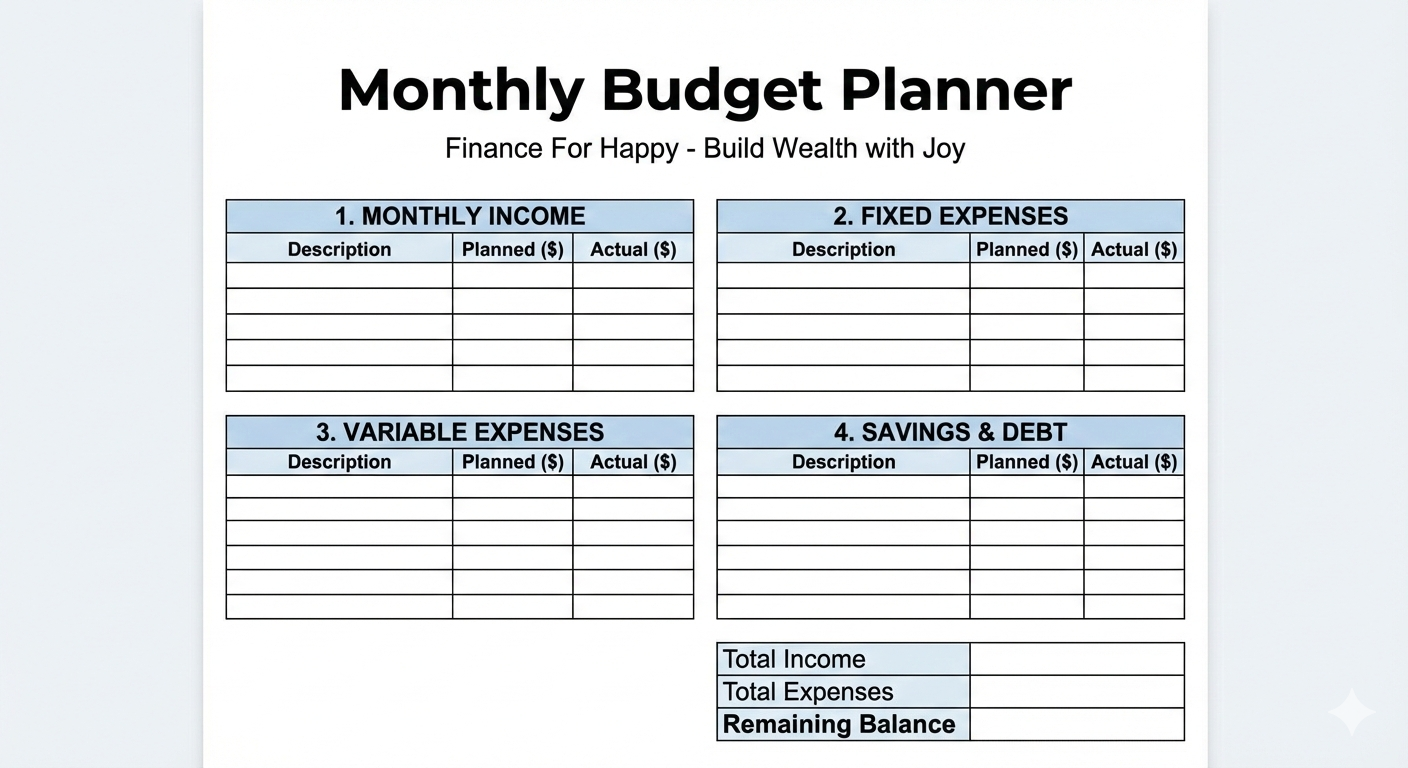
To make budgeting easier, we created a Free Monthly Budget Printable that you can download and print each month.
What's Inside:
- Income tracker
- Expense tracker
- Savings goals
- Debt repayment tracker
[Download Free Budget Planner (PDF) - Coming Soon]
Last Word: A Budget Is Freedom, Not a Trap
A good budget provides peace of mind. It reassures you that your bills are paid, your savings are growing, and your financial goals are within reach. Start small — perhaps just tracking your spending for one week. Then, gradually move to a full monthly plan.
Wealth doesn’t have any secrets — just consistency. The path to financial success begins with one simple step: making your budget work for you.
Quick Summary: How to Create a Monthly Budget That Works
- Set financial goals
- Define total monthly income
- List all expenses (fixed and variable)
- Subtract expenses from income
- Set spending limits
- Track spending daily or weekly
- Save regularly
- Reduce debt
- Review and adjust monthly
- Use a free printable planner
Stay happy and wealthy, Finnly Joy
Disclaimer: This is my personal story shared for educational and motivational purposes. I am not a financial advisor. Please do your own research or talk to a professional before making any major financial moves.