The Lazy Portfolio Strategy: How to Build Wealth Without Watching the Market
Tired of stock market anxiety? Discover the Lazy Portfolio strategy—a simple, automated approach using low-cost index funds to build long-term wealth without staring at daily charts or stress-trading.

You log onto your investment app at 9:30 and notice Apple is down 2%. Tesla is up 4%. BitCoin is all over the place. Three screaming gurus on YouTube believe that there is a huge market crash coming tomorrow.
Your heart skips a beat. Should you sell all your stocks, buy gold, or throw all your money into what stock Reddit says to buy today?
Take a deep breath.
Wall Street has created a money printing machine using one simple lie: that building wealth requires staring at stock tickers, reading balance sheets, and active day trading.
Here's the harsh truth no one will tell you: active trading is a losing game for the average investor.
You do not need to have high anxiety and sleepless nights to build wealth. You do not need to actively research and trade to build wealth. All you need is a simple lazy portfolio, that sits quietly in the background while you go live your life.
The Lazy Portfolio Playbook
- Passive Investing Beats Active Managers: Broad market index funds will outperform most active fund managers over a 15-20 year period.
- Keep it simple: Simply buying 2-3 low-cost funds will give you diversified exposure to the entire world market.
- Set it and forget it: Having automated deposits take a tiny slice of your paycheck every month will let your money grow while you sleep.
- Ignore the noise: Financial headlines cause impulsive trading. Building wealth should be a boring, methodical process.
 Finnly Joy

1. What is a lazy portfolio?
A lazy portfolio is a set and forget investing strategy that focuses on buying low-cost index funds.
As the name suggests, there is nothing fancy or exciting about a lazy portfolio - it will slowly and steadily grow your money. You will not need to actively watch the markets or research individual stocks.
All you need to do is set up a couple of automatic deposits and check your account balance maybe once or twice a year for about thirty minutes.
Instead of spending hours and days trying to find the next hot stock tip, you can simply buy funds that track the entire market.
Old Mindset / Active Trading: Chart watching ➔ Panic ➔ Higher fees ➔ Lower returns ❌
Soft Mindset / Lazy Portfolio: Total market funds ➔ Automate deposits ➔ Zero stress ➔ Long term wealth ✅
Think of the market as a giant haystack. Traditional stock pickers spend their lives searching for a few needles inside the haystack. A lazy portfolio investor just buys the whole haystack.
When you buy a simple index fund portfolio it means that you own a tiny sliver of thousands of profitable companies around the world. The companies could be Apple, Microsoft or Amazon, or any thousands of other publicly traded companies. If one company has a bad year, a dozen other companies will make up for their losses.
2. Why is this strategy 100% proven by data and experts?
If you are feeling hesitant or like this could be some kind of scam, you are not alone. This is the investment strategy backed by data, not by snake oil salesmen
Recommended by Warren Buffett
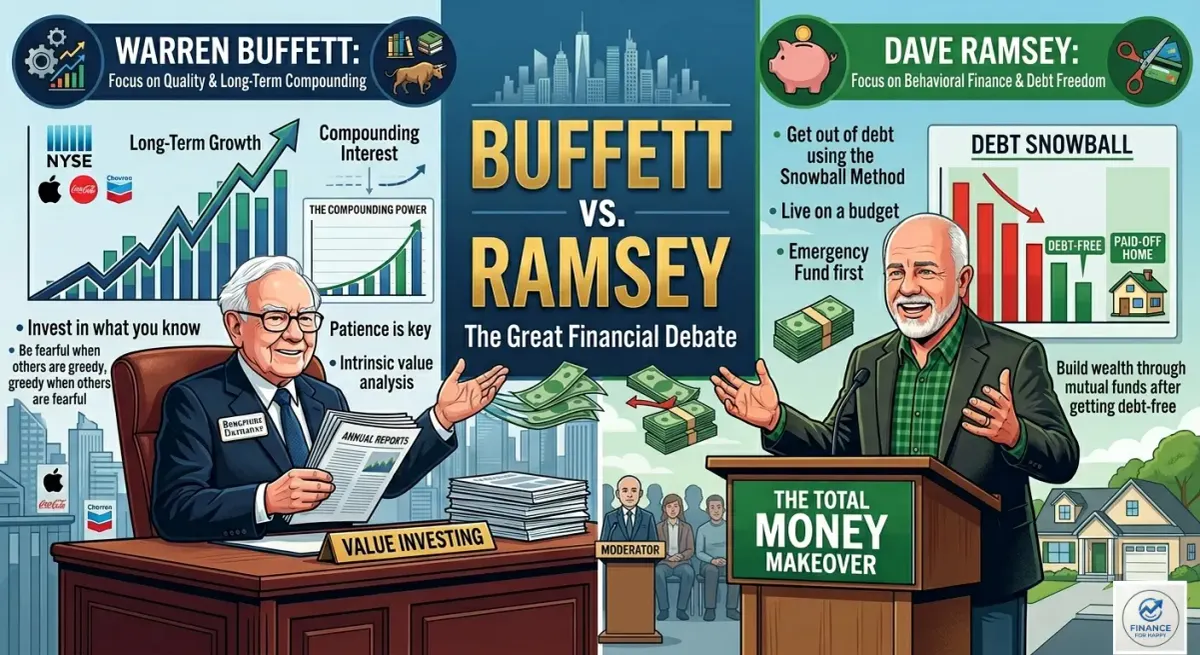
Warren Buffett one of the richest and most successful investors of all time has stated that a low-cost S&P 500 index fund is the best possible investment for 99% of individual investors. In fact, in his will it was stated that 90% of the cash proceeds that Buffett's wife received were to be invested in a low-cost S&P 500 index fund.
 Finnly Joy
The hard numbers won't lie: 85%+ of professionals fail
According to various market analyses like the SPIVA (S&P Indices Versus Active) reports, over 85-90% of professional money managers fail to beat a simple index fund over a 15-20 year period. If professional Wall Street traders can not beat the market on a consistent basis, it makes beating the market an impossible task for the average Joe.
Backed by Nobel Prize winning economics
Modern portfolio theory, pioneered by economists like Harry Markowitz and William Sharpe, has shown that diversification is the only "free lunch" in finance.
3. Why does doing less make you more money?
How does doing less make you more money? There are three reasons why a set and forget investing approach beats active trading: fees, taxes, and human psychology
High fees decimate your returns
Active funds will charge you much higher fees since they have to pay their fund managers. Even 1% taken out of your account every year can reduce your retirement account balance by over 25% when compounded over thirty years. Broad market funds charge almost nothing.
You can not out-skill your own psychology
When people panic and sell their stocks when the market crashes, they guarantee that they will make less money. When bullish markets cause people to buy stocks at the peak, they also lock in the worst possible returns. A hands off approach eliminates human psychology from the equation.
4. Real world case study: The lazy portfolio vs active trading
Let's look at two friends who just graduated from college. Both friends decide to start investing $500 per month from their first paycheck. Let's see who ends up with more money after thirty years
Alex the active trader:
Alex spends two hours per night watching financial news channels and day trading hot stocks. He buys and sells frequently, but due to bad market timing, trading fees, and taxes he only averages a 5% return per year.
In thirty years he will have roughly $416,000, but he will have spent countless sleepless nights staring at his computer screen.
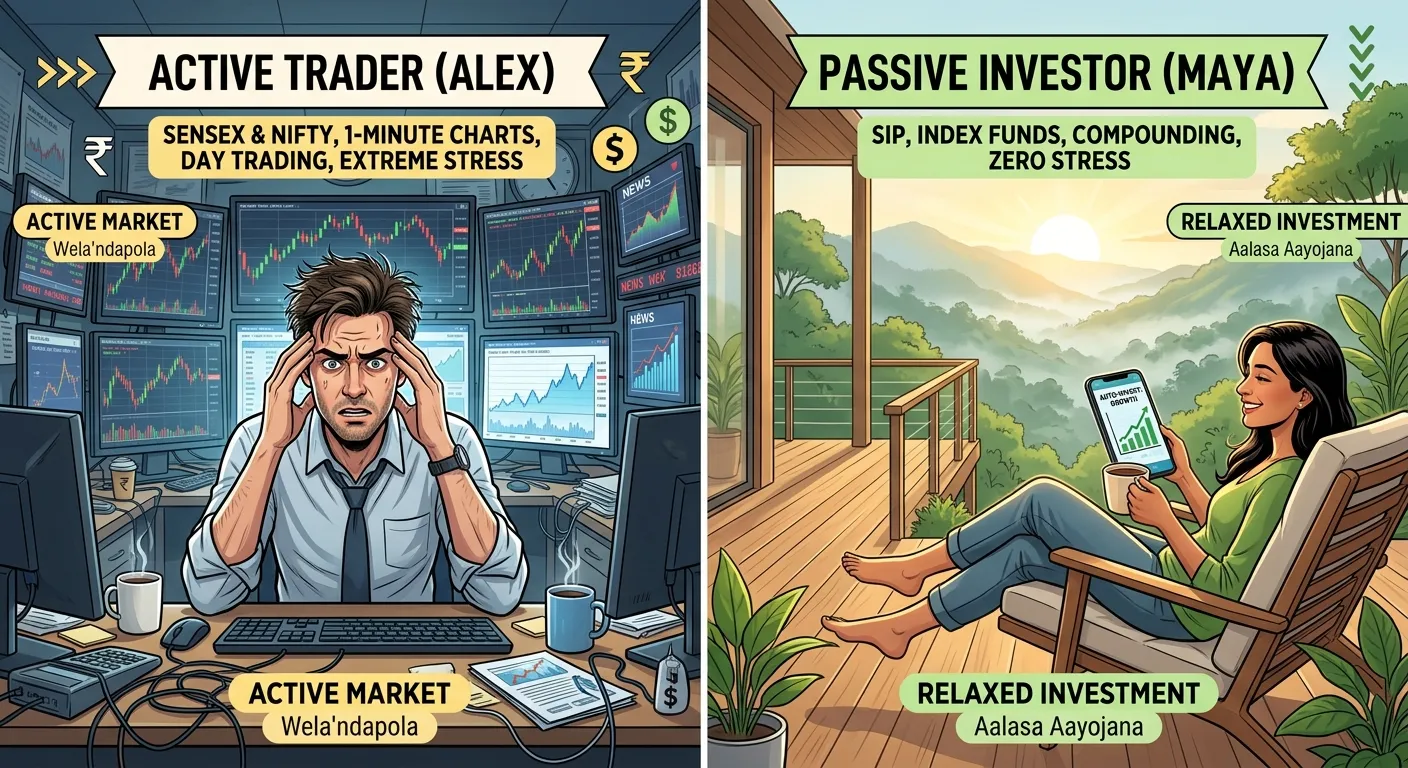
Maya the lazy portfolio investor
Maya opens up a brokerage account, sets up a simple two-fund portfolio, and forgets about it for thirty years. By simply riding the bull market she earned a 9% return
Maya ends up with a whopping $919,000
5. How to build your simple 2 or 3-fund portfolio
You do not need to open twenty different brokerage accounts and buy dozens of different stocks. Most successful lazy portfolio investors only stick to two or three funds.
Option A: The 2-fund portfolio (ultimate simplicity)
Good for: Younger investors wanting the simplest possible portfolio
- Total US Stock Market Index Fund (80%): This will give you exposure to over 3,500 different US-based companies (examples: Vanguard VTI / VTSAX or Schwab SWTSX)
- Total International Stock Market Index Fund (20%): This will give you exposure to thousands of different international companies (examples: Vanguard VXUS / VTIAX)
Option B: The classic 3-fund lazy portfolio
Good for: Investors wanting a bit more stability, or nearing retirement
- Total US Stock Market Fund (60%)
- Total International Stock Market Fund (20%)
- Total US Bond Market Fund (20%): The bond market provides a steady stream of income, and will act as a buffer during stock market crashes (example: Vanguard BND / VBTLX)
6. The "Set and forget" automation Guide
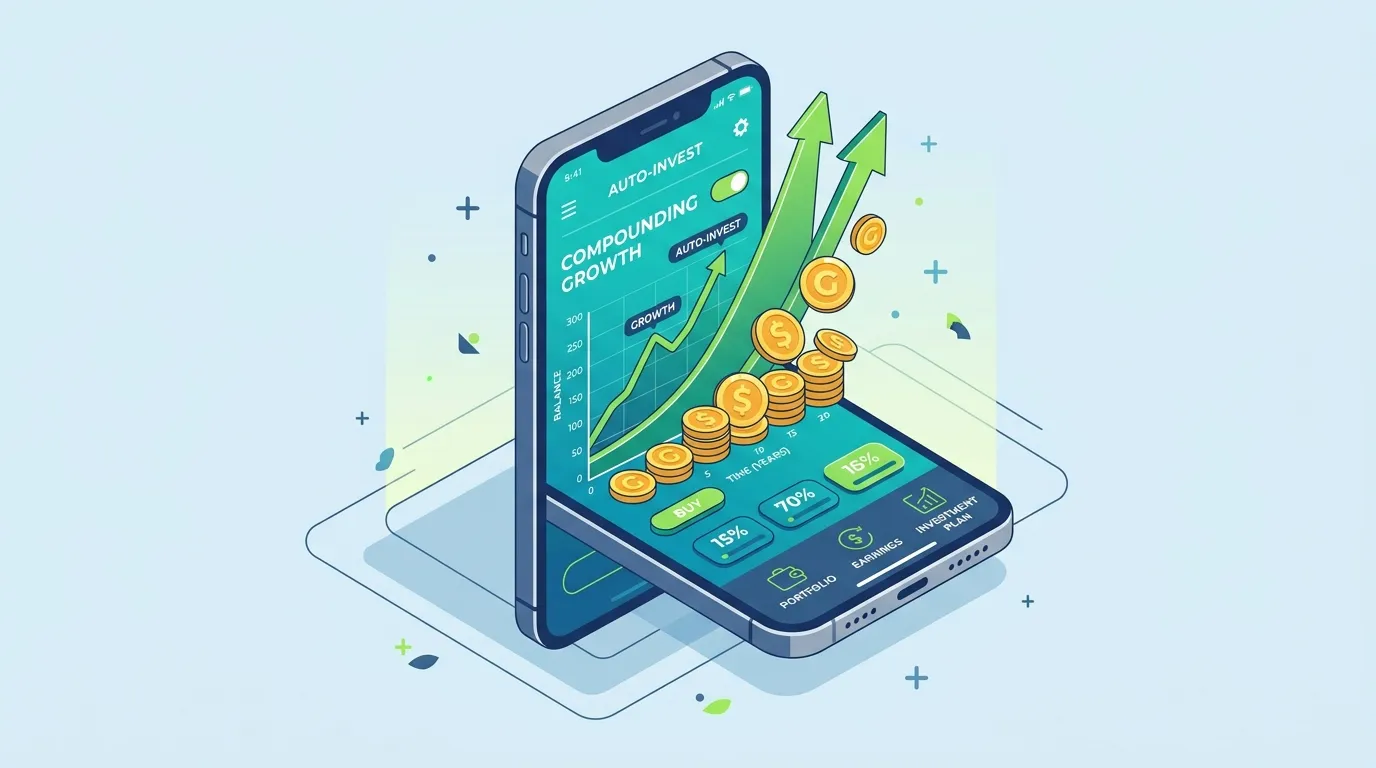
The magic of the lazy portfolio lies in the automation. If you have to manually tell your brokerage to send money to your account every month, you will inevitably forget and skip a deposit when the market crashes
- Open an investment account: Open an account with a low-cost brokerage like Vanguard, Fidelity, or Charles Schwab.
- Pick your index funds: Buy low-cost total market funds with expense ratios of 0.05% or lower
- Automate your deposits: Set up automatic deposits that take a small percentage of your paycheck every month
- Rebalance your portfolio: Once a year, check your portfolio balance and rebalance it if needed. Instead of selling stock funds to rebalance your portfolio, use your monthly deposits to buy more of the funds that are lagging behind.
- Log out and live your life: Set and forget!
7. our 30-Day "Autopilot Investor" Challenge
- Week 1: Clear the RunwayTackle any high-interest credit card debt first. Investing while paying 20%+ interest is like trying to run with a parachute attached.
- Week 2: Build Your Safety NetPark 3 to 6 months of living expenses in a High-Yield Savings Account (HYSA) so market crashes won't force you to sell early.
- Week 3: Open & Pick Your FundsOpen a tax-advantaged account (like a Roth IRA) or a standard brokerage, then select 2 or 3 total market index funds.
- Week 4: Turn On AutopilotSet up a recurring transfer on payday—even if it’s just $50—and let compounding quietly work in the background.
What is the best lazy portfolio for beginners?
A simple two-fund portfolio with a Total US Stock Market Index Fund (80%) and a Total International Stock Market Index Fund (20%) will provide the most bang for your buck with minimal effort
How often should I rebalance my portfolio?
Once a year is good enough. Over-monitoring and over rebalancing can cause unneeded stress and tax implications. Whenever possible, rebalance your portfolio by using your monthly deposits to buy more of the underweight asset class instead of selling appreciated funds
Is a lazy portfolio safe during a market crash?
Index funds will plummet just like individual stocks during a market crash, but there is much less risk with a diversified market basket. Historically the market has always rebounded and reached new highs in a matter of years
Stay happy and wealthy,
Finlly Joy
 Finnly Joy

Disclaimer: The information provided in this article is for educational and informational purposes only and should not be construed as professional financial, investment, or legal advice. Financial situations and credit scoring algorithms vary by individual and location. Always consult with a certified financial advisor or credit professional before making any major financial decisions.