Nick Sleep’s Nomad Strategy: The Lazy Secret to 900%+ Returns
Discover how Nick Sleep achieved a 921% return using the 'Scale Economies Shared' model. Learn from Amazon and Costco’s success to build long-term wealth.
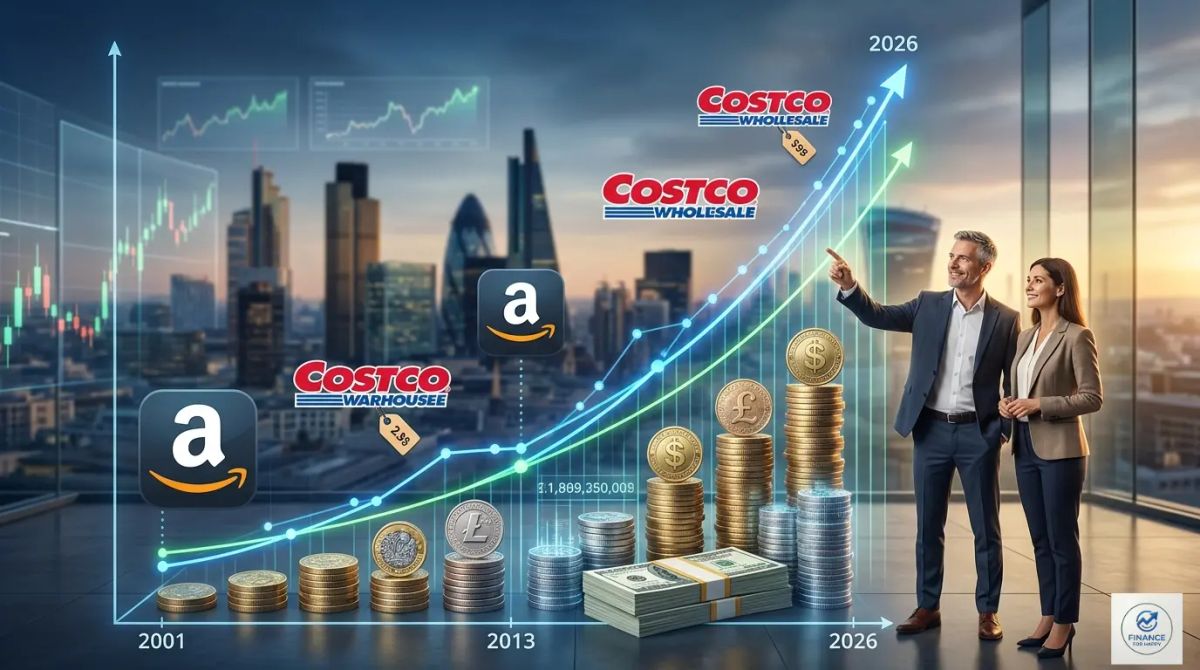
In the world of international finance where high-speed algorithms and microseconds matter, the tale of Nick Sleep and the Nomad Investment Partnership is a quiet revolution.
While the rest of the world was dealing with the Dot-com crash and the 2008 Great Recession, from 2001 to 2013, Sleep and his business partner Qais Zakaria delivered a whopping 921% total return.
Their secret? Doing next to nothing—apart from thinking much deeper than everyone else.
* The "Scale Economies Shared" Model: The exact business framework Nick Sleep used to spot generational winners.
* The Art of Inactivity: Why doing less research and fewer trades beats Wall Street.
* The 3 Stocks That Made Millions: The hyper-concentrated portfolio behind the 900%+ returns.
They did it through a simple strategy—not doing much, but thinking deeper. Instead, they did it by doing next to nothing, apart from thinking harder.
The Mathematical Engine: Scale Economies Shared (SES)
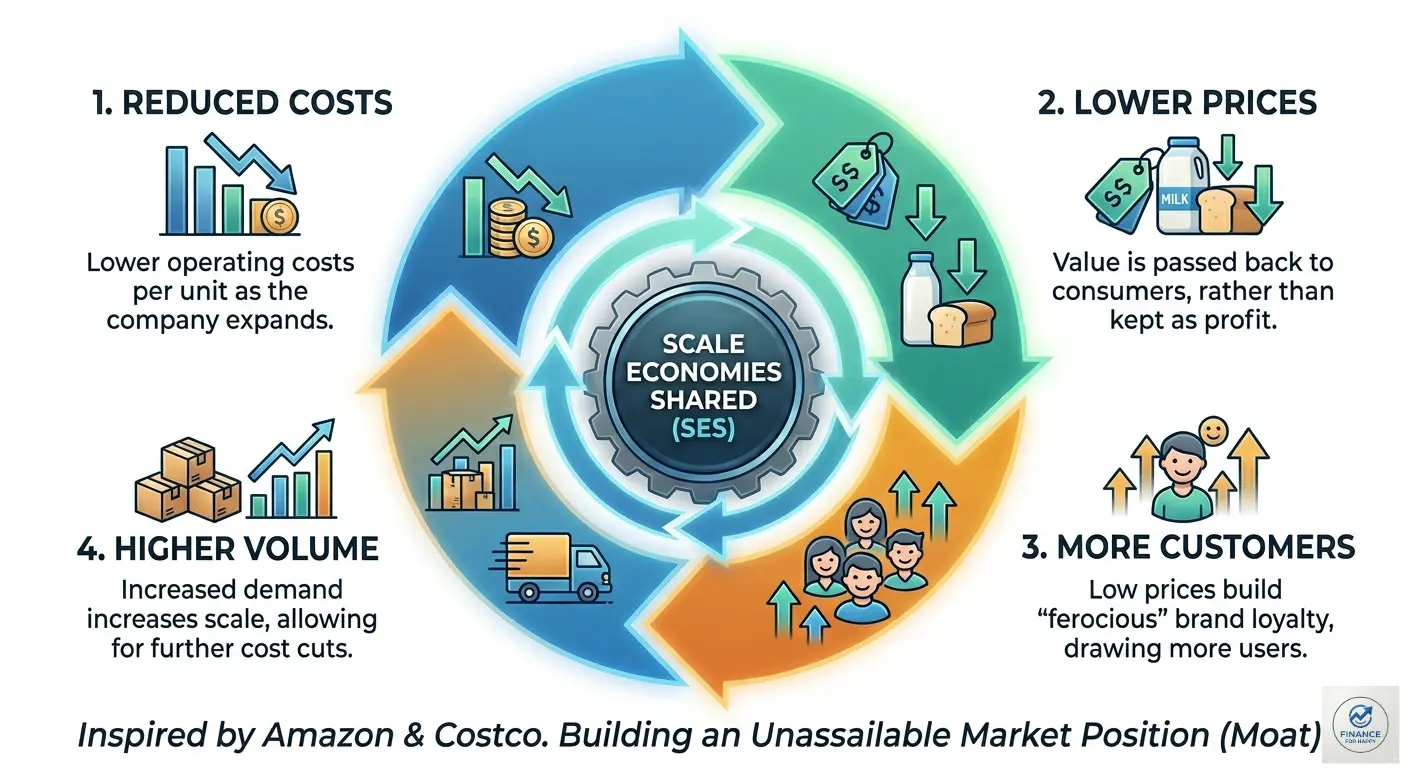
Sleep's great idea is a business model called "Scale Economies Shared" (SES). Let's start with some economics. When companies reach a certain size (scale), they tend to use their higher levels of profitability to pay shareholders in the form of dividends, or to pay senior managers a performance bonus.
But Nick Sleep understood that the most successful companies do the opposite. They pass the savings they achieve because of their size on to the consumer as price reductions.
How the SES Loop Works:
- Economies of Scale: The company's cost per unit declines as it expands.
- Reciprocal Consumption: The company passes that dollar back to the consumer, rather than keeping the profit.
- Deepening the Moat: This draws customers to the company, increasing scale even more.
- The Flywheel Effect: This creates a "flywheel" or virtuous cycle that makes it impossible for rivals to compete.
 Finnly Joy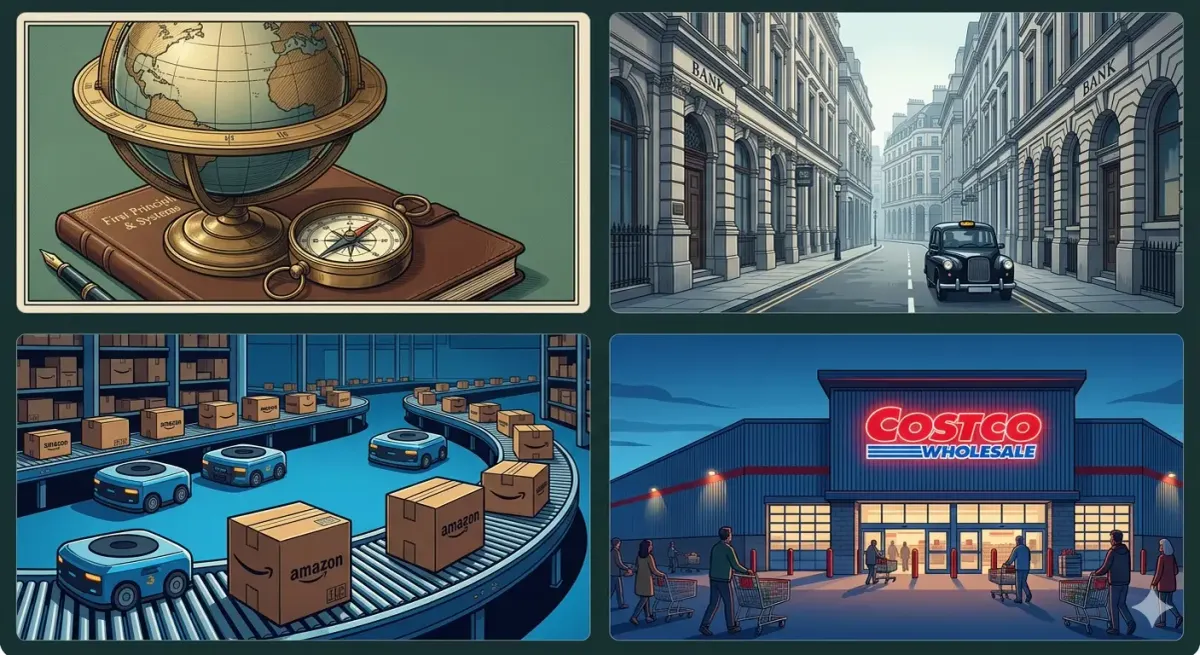
Costco and Amazon are the prime examples. For example, Costco has a policy that they don't raise the price of an item by more than 14-15%. If they can get a hot dog to you for less, they don't raise their profit margin; they reduce the price of the hot dog or the gallon of milk. This builds "ferocious" brand loyalty.
Comparative Growth: Amazon vs. Costco (2001 - 2013)
| Metric | Amazon (AMZN) | Costco (COST) |
| Core Business Model | Scale Economies Shared (SES) | Scale Economies Shared (SES) |
| Value to Consumer | Lower prices & rapid delivery | Fixed 14-15% markup over wholesale |
| Revenue Growth | From ~$3 Billion to ~$74 Billion | From ~$34 Billion to ~$105 Billion |
| Stock Price Growth | Over 2,000% increase | Over 300% increase |
| The "Moat" | Massive logistics & Prime ecosystem | Membership fees & extreme loyalty |
"While Amazon was hyper-growing and Costco was progressively dominant, both adopted the same mathematical model: passing on the fruits of efficiency to the customer to create an unassailable market position."
Looking 20 Years into the Future
Most Wall Street and City of London analysts talk about "Quarterly Earnings"; Sleep talked about "Destination Analysis."
Rather than asking, "What will the stock price be next month?" he asked, "What will this company look like in twenty years?" He didn't care about the trip; he cared about the destination. If the business model was aligned with the SES loop, he knew that it would be great.
That enabled him to have a concentrated portfolio. Nomad at one time had nearly 40% invested in Amazon. To most fund managers, this was a gamble. To Sleep, who had done a Destination Analysis, it was the soundest investment.
 Finnly Joy
The Psychology of "Waiting for the Fat Pitch"
Nick Sleep had a famous office away from the madding crowds. He thought the information overload (or the 24-hour news cycle) was "informational junk food."
He became a "Coffee Can Portfolio" investor: the principle of buying a great business and then (literally) placing the certificates in a coffee can and leaving them there for ten years. Here's where we come back to Consistency and Mathematics. The magic of compounding requires you not to "cut back the branches." Every time an investor sells to "realize profits," they pay taxes and fees, but more importantly, they break the compounding line.
Diversity through Concentration: Less is More
The majority of financial advisors advocate "diversification" as a way of hedging risk. Nick Sleep explained that if you know what you're doing, diversification is a hedge against your lack of knowledge.
By being focused and disciplined on a handful of high-conviction ideas—namely Amazon, Costco, and Berkshire Hathaway—Sleep could understand these businesses better than anyone. He wasn't investing in the stock market, but in the psychology of the people who liked those companies.
 Finnly Joy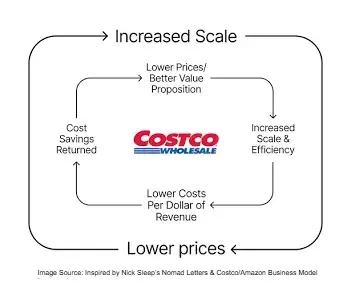
A Noble Ending: Closing Nomad
In 2013, at the peak of his success, Nick Sleep did the unthinkable in the investment world: he paid back his investors and shut down the fund. He "solved the puzzle."
Sleep saw making money as a consequence of thinking right. He moved to philanthropy where he used the same "Scale Economies" approach. When he left the profession of investing, he left a legacy of the "Nomad Partnership Letters"—a series of articles that is now a "Bible" for long-term value investors.
Using the Nick Sleep Method in 2026
The advice of Nick Sleep is as valid today as ever for the individual investor in the US and UK. In the age of AI and the "now," the "Silent Path" is the most lucrative.
- Buy SES Businesses: Companies that drive down prices to consumers as they expand.
- Don't listen to the "Noise": If you've done your Destination Analysis, a 20% drop in the market is a sale.
- Reduce Frictional Costs: Each trade is a hole in your wallet. Strive for no turnover.
- Quality over Quantity: Better to have a few good businesses than lots of mediocre ones.
 Finnly Joy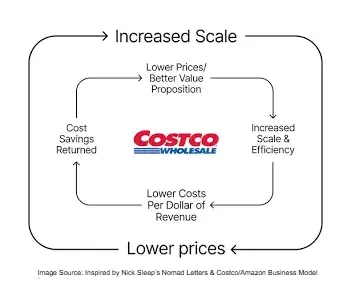
Final Thoughts
Nick Sleep showed that ultimately it doesn't matter if you are the fastest runner in the race; it is enough that you don't stop running. By investing in the success of both customer and business, he didn't just create a portfolio, he created a roadmap for true financial freedom.
Stay happy and wealthy,
Finnly Joy.
Read more about the power of long-term compounding: The advantage of investing once and staying silent for years
Disclaimer: The content provided in this article is for educational and informational purposes only and does not constitute professional financial, investment, or legal advice. Investing involves risk, including the possible loss of principal. Past performance of companies like Amazon and Costco is not indicative of future results. Always conduct your own research or consult with a licensed financial advisor before making any investment decisions. Financeforhappy.com and its authors are not liable for any financial losses arising from the use of this information.