Your Savings Account is a Fraud: Why Compounding is Your Only Escape
Stop saving and start growing. Your savings account is designed to keep you stagnant, but compounding is designed to make you wealthy. Learn the mathematical truth behind the world’s eighth wonder and how to pivot your strategy before it’s too late
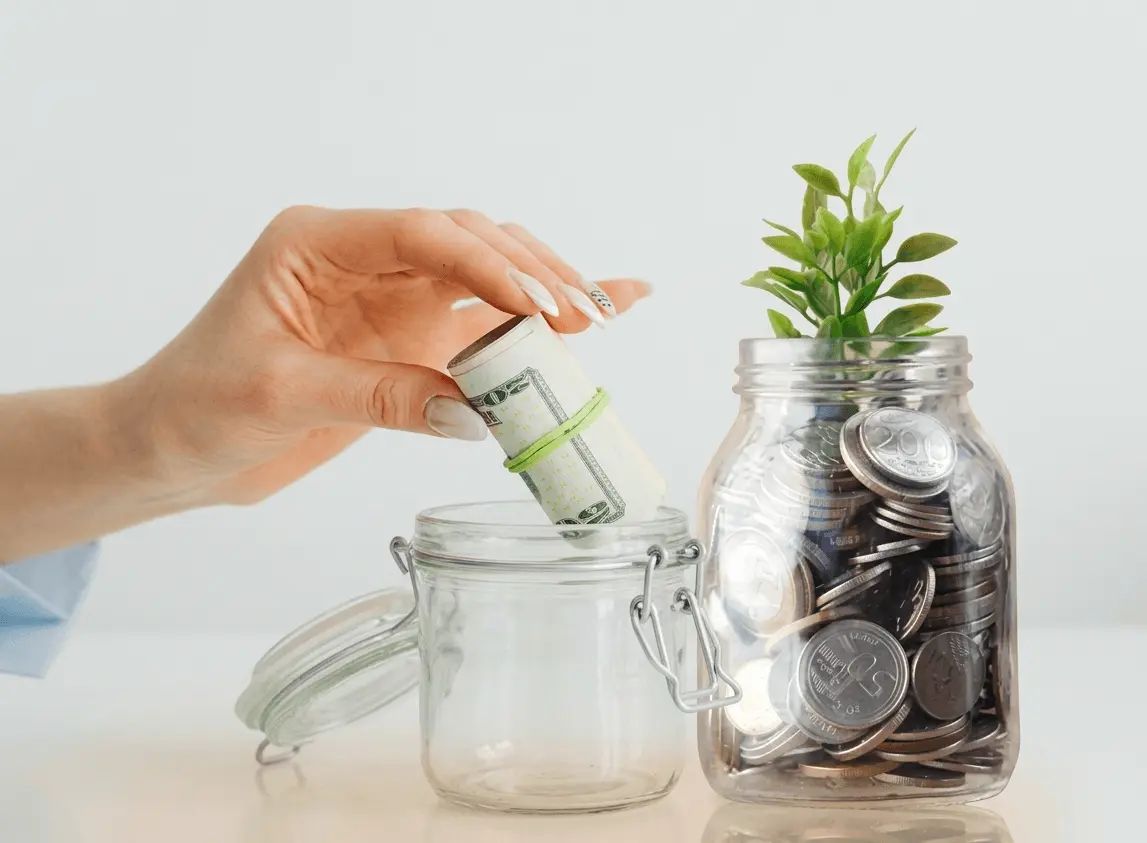
I remember sitting across from a bank manager a few years ago, watching him smile while explaining the "benefits" of a 0.5% savings account. He made it sound like a fortress for my money. But as I walked out, I did some quick math on a napkin, and the reality hit me like a cold bath: My "safe" money was actually dying.
If you’re reading this, you’ve probably heard the same old story. Work hard, save 10%, and trust the bank. But let’s be honest—most financial "experts" are giving you advice that worked in 1970, not 2026. The ugly, frosty truth they won't tell you in a glossy brochure is this: When inflation in the UK or the USA is racing at 4% to 7% and your bank is crawling at 0.5%, you aren't saving. You are literally paying the bank to watch your wealth disappear.
Every year your cash sits idle, your buying power shrinks. You are falling into poverty in a gradual, nearly invisible manner. A savings account won't give you freedom before it’s too late. To win, you need a Compounding Engine.
1. The Silent Thief: Inflation vs. Your Future
Think of inflation as a hole in your bucket. You keep feeding it with your hard-earned cash, but the hole is widening. In 10 years, $100 won't buy what $100 buys today. Historically, the costs of housing, energy, and healthcare in the UK and USA have risen at a significantly higher rate than wages.
To become Financially Independent, your money must grow faster than the cost of living. This isn't a luxury; it is a necessity for survival. Without an investment that beats inflation, you are running backward on a treadmill. The reasoning behind the Nick Investor strategy is simple: Wealth is not the quantity of money you possess, but the quantity of goods and services you can buy with it.
2. The Data Scientist’s Reality Check
Let’s look at the raw numbers. Assuming you invest $500 a month with an annual rate of return of 10% (the historical average of the S&P 500), here is your path to freedom:
|
Years of Investing |
Total Amount Saved |
Interest Earned (Compounding) |
Total Portfolio Value |
|
5 Years |
$18,000 |
$5,245 |
$23,245 |
|
10 Years |
$36,000 |
$24,491 |
$60,491 |
|
20 Years |
$72,000 |
$154,611 |
$226,611 |
|
30 Years |
$108,000 |
$583,923 |
$691,923 |
The magic isn't in the $500; it’s in the Time. This is how a person with a modest salary can turn a monthly saving into a million-dollar exit plan. As the facts reflect, it is not about "timing the market," but about your time in the market.
3. The $5 Latte vs. The "Time Leak"
The majority of financial gurus will tell you to do away with your daily $5 coffee. They claim the secret to becoming a millionaire lies in skipping your latte. They are wrong. It is a waste of mental energy to focus on small expenses.
You are wasting time discussing a cup of coffee that actually makes you happy, while ignoring the real murderer: The Time Leak. The longer you delay before you begin to compound, the costlier it is in the long run—more than the price of a fleet of luxury cars. The math explains itself: It is far more efficient to invest $100 every month when you are 25 than $1,000 every month when you are 45. The enemy is not your coffee habit; the enemy is procrastination.
4. The Edible Asset: Urban Gardening and Homesteading ROI

For house managers or stay-at-home parents looking for "seed money" to invest, consider your backyard or balcony. Urban Gardening and Homesteading are becoming massive financial hacks in the UK and USA.
- The Premium Product Factor: High-end supermarkets (like Whole Foods or Waitrose) charge luxury prices for organic greens. By growing your own spinach, herbs, and tomatoes, you are producing a high-end product at zero cost.
- Composting (Black Gold): Waste management in the West is an increasing expense. By composting kitchen waste, you save on garbage fees and end up with high-quality soil that usually sells for $15–$20 a bag.
- Health as Wealth: Gardening has a scientifically proven cortisol (stress) reducing effect. Your garden is, in short, a Health Insurance Policy.
5. Financial Identity: Risk Management for the Modern Home
Any smart CEO has a contingency plan. In personal finance, this is known as Risk Management. Life happens—unfortunate events or changes in relationship status occur whether we want them to or not.
Every person should have a Financial Identity:
- Independent Credit Score: Establish a credit history under your own name.
- Asset Transparency: Know the precise location of deeds, insurance policies, and brokerage accounts.
- The Spousal IRA: In the USA, it is possible to use a Spousal IRA even when you do not have a formal income to build your own retirement fund.
Happiness is founded on being ready. This is not a matter of trust; it is a matter of Operational Security.
6. Scaling Outside the Home: Digital Assets
Once you get familiar with your budget at home, the next step is to build Scalable Assets. We target investments that do not need manual attention to grow:
- Blogging and AdSense: Developing content in a high-value niche like Sustainable Finance.
- Faceless YouTube Channels: Using AI to develop educational content.
- Digital Communities: Building a brand that makes money 24/7.
These are not "side hustles"; they are equity-building businesses that allow you to reach the world right from your living room.
7. FAQ: Common Obstacles to Wealth
Q: Does the stock market seem too risky for my family?
A: Storing money in a savings account is a 100% guarantee that inflation will take away your purchasing power. Although diversified index funds are subject to market risk, they have been the largest wealth creators ever recorded over a 20-year span.
Q: I only have $50 a month. Is it worth it?
A: Yes. The habit of investing is more important than the amount. $50 a month with a 30-year growth rate of 10% will still result in nearly $115,000. That is much better than nothing.
Q: What about the present economy and recession fears?
A: To a long-term investor, a market dip is a Clearance Sale. You are buying stock in the greatest corporations in the world at a discount. If you are 20 years away from retirement, today's news is just noise.
The Happiness Connection
At FinanceForHappy, we don’t view money as a high score in a video game. We view it as a tool to buy your freedom. Happiness is the ability to wake up on a Monday morning and realize you don’t have to do anything you don't want to do. As your investments grow, your "survival threshold" drops. When your portfolio covers your bills, you are no longer a worker—you are a sovereign individual. True wealth isn’t about the balance in your bank account; it’s about the level of control you have over your own time.
Stay happy and wealthy, Finnly Joy
The Power of Consistency: How to Win at Your Side Hustle www.financeforhappy.com/the-power-of-consistency-how-to-win-at-your-side-hustle
Disclaimer: This article is for educational and motivational purposes only. I am not a financial advisor. Credit cards involve financial risk; please conduct your own research or consult a professional before making major financial moves.