What Happens When You Put All Monthly Bills on a Credit Card and Pay It Immediately
Should you pay all your monthly bills with a credit card? When done right, this strategy earns hundreds in cashback and builds credit fast. Discover how to avoid sneaky convenience fees, manage statement dates, and automate payments to keep your balance interest-free.

Putting all your monthly bills on a credit card and paying off the full balance immediately is one of the most effective personal finance strategies to earn cashback rewards, build credit, and secure your liquidity. When executed with discipline, utilizing credit cards for recurring expenses turns baseline living costs into free cash returns or travel points while strengthening your overall credit profile.
If you have asked yourself whether putting all of your monthly bills on a credit card is a smart move, you are in good company. This is a widely debated personal finance strategy online, with many people asking on financial forums whether charging recurring bills earns free money or risks hurting their credit score.
When used properly, using your rewards card to charge everything and pay off your bill right away can help you earn tons of cash back, boost your credit rating, and add another level of consumer protection. But if you overlook some details, processing fees can sneakily eat up your profits.
Key Takeaways at a Glance
- Bill Payments: You can save $200–$600+ a year on purchases you would have made anyway by using cashback cards.
- Credit Growth: Using cards consistently and paying them off promptly will establish your reliability to credit bureaus and help your credit score grow faster.
- Surcharges: Convenience fees from utility companies and landlords higher than 1.5% will destroy all your reward gains.
- Automation is Mandatory: Don't do this job by hand ever. Set up auto-pay for the entire statement balance to prevent paying interest.
How Routing Bills Through a Credit Card Actually Works
The first step in learning this strategy is to understand how credit card billing cycles work. Many people hesitate to use credit cards because they incorrectly equate borrowing on credit with falling into debt.
If you pay a bill using a credit card, the card issuer will make the payment to the vendor. That transaction results in a temporary balance on your account. If you do not make any changes to that balance after the deadline, the credit card company will impose high annual percentage rates (APR), typically 20% to 30%. If you pay off the balance before the end of the billing cycle or pay the balance during the interest-free grace period, however, you pay $0.00 in interest.
| Process Step | Action | Outcome |
| 1. Monthly Bills | Charge recurring expenses to credit card | Earns cashback & rewards points |
| 2. Grace Period | Keep payment cash in High-Yield Savings Account | Earns risk-free compound interest |
| 3. Statement Payoff | Auto-pay statement balance in full before due date | $0.00 interest charged |
The Difference Between Statement Date and Due Date
There are two important dates that you need to understand so that this system can be totally safe:
- Statement Closing Date: This is the day your monthly billing cycle concludes and your statement is created.
- Payment Due Date: The deadline (typically within 21 to 25 days of the statement date) for making payments without being charged interest.
Under a paying monthly bills with credit card cashback plan, you can pay off purchases immediately after they post or set up monthly auto-pay for the full statement amount, so you never owe a single cent in interest charges.
 Finnly Joy
4 Major Benefits of Putting All Monthly Bills on a Credit Card
Routine expenses are not only plastic-friendly, but they're convenient, too. It's a strategic maneuver to make the best of every dollar that's leaving your wallet.
| Core Advantage | Strategy Mechanism | Primary Benefit |
| 1. Cashback & Rewards | Charge recurring basic living costs | Get back 1% - 5% on everyday purchases |
| 2. Credit Building | Pay recurring bills monthly on card | Rapidly build consistent payment history |
| 3. Cash Float Interest | Hold payment funds in high-yield account | Maintain cash in high-yield accounts longer |
| 4. Fraud Protection | Keep main checking account unexposed | Protect main bank accounts from breaches |

1. Maximizing Cashback and Reward Points
Why shell out a whopping $200 in monthly electric and internet charges on your debit card if you could earn cash back on those bills? You can earn 2% cash back, or as much as 3% to 5% on certain categories such as cell phone and utility bills, turning these rewards into an annual bonus.
If your recurring bill payments add up to $1,000 and you spend $500 on groceries:
- 2% Cash Back: You get $30/month, which equals $360 a year in pure profit.
- Sign-Up Bonuses: Making all your monthly payments on a new card helps you meet minimum purchase limits to earn $200 to $500 sign-up bonuses without spending extra cash.
2. Building Credit Velocity Rapidly
Payment history is 35% of your total credit score. Yes, paying bills with credit card to build credit fast does tally up. Lenders prefer to see a steady stream of credit usage and prompt payment. Using your card for 5 to 10 recurring bills gives multiple positive data points to credit bureaus each month and makes you look like a low-risk borrower.
3. Exploiting the Interest-Free Cash Float
Direct bank debit means the money disappears as soon as you pay a bill. If you pay with your credit card, your cash stays in your High-Yield Savings Account (HYSA) for another 20 to 40 days until your card balance is due. Your bank account earns compound interest during that grace period, rather than the utility company.
4. Superior Fraud Protection and Financial Safety
If a scammer gets your debit card, they empty real money from your checking account, which may lead to bounced rent checks during the investigation period. When someone steals your credit card number, the money belongs to the credit card company, not you. Credit card fraud doesn't pose a threat to your day-to-day liquidity as it does with a debit card.
 Finnly Joy
Real-World Case Study: Sarah’s $612 Annual Optimization
Let's look at how this applies in the real world with Sarah, a financial accountant who audited her family's expenses to free up extra cash flow.
| Expense Type | Monthly Cost | Payment Method | Cash Back |
| Groceries & Supermarket | $600 | 6% Preferred | $36.00 |
| Utilities & Internet | $300 | 5% Business | $15.00 |
| Streaming & Subscriptions | $50 | 3% Card | $1.50 |
| Cell Phone Plan | $100 | 5% Card | $5.00 |
| Auto Insurance & Fuel | $450 | 2% Flat Card | $9.00 |
| TOTALS | $1,500/mo | Auto-Pay System | $66.50/mo |
| ANNUAL NET REWARDS GAINED | $798.00/yr | ||
| LESS CONVENIENCE FEES | -$186.00/yr | ||
| FINAL ANNUAL PROFIT | $612.00/yr |
Prior to optimization, Sarah made all these payments by direct checking transfers. Sarah saved a net $612 per year by switching to category-specific credit cards and paying off the resulting balance each payday, funding her annual emergency fund contribution without changing her lifestyle by a whit.
The Hidden Traps: When This Strategy Fails
The math may be perfect on paper, but this requires attention to detail. These are the primary problem areas to avoid:
Convenience Fees and Surcharges
When paying bills with a credit card, always ask: does paying bills with credit card incur fees? Municipalities, water departments, and landlords often add a convenience fee of 2% to 3.5% to pass along credit card processing costs.
- The Golden Rule: If the vendor charges a 3% convenience fee and you are only getting 2% cash back, you are giving up 1% net. Always pay with a checking account or debit card when dealing with vendors who charge processing surcharges.
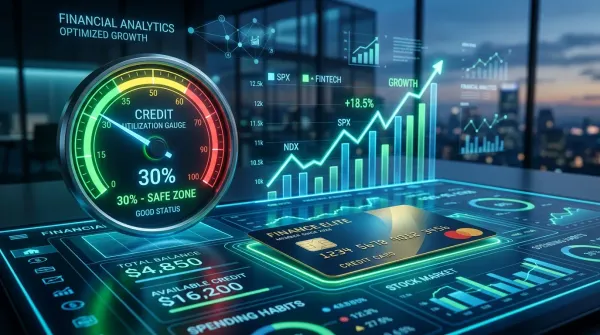
Credit Utilization Spikes & The 1%–3% Rule
Credit utilization accounts for 30% of your credit score. Waiting until the statement date to pay means that if you have combined monthly bills of $3,000 and a credit limit of $4,000, your statement will report a 75% utilization rate, causing your score to dip temporarily.
- The Fix: Pay down most of your balance before your statement closing date to avoid high reported utilization. However, do not report a $0 statement balance every month, as credit bureaus may treat your account as inactive. The ideal YMYL approach is to allow a small balance of 1% to 3% to post on your statement date, and then let auto-pay pay off that remaining statement balance in full before your payment due date.
| Strategy Type | Reported Statement Balance | Credit Score Impact |
| High Utilization Risk | Over 30% of credit limit | Temporary score drop |
| Zero Statement Balance | $0 reported balance every month | May appear inactive to bureaus |
| Optimized Approach | 1% - 3% reported balance | Optimal credit score growth |
The Lifestyle Creep Trap
It's easier to spend money with plastic than to watch it physically go out of a bank account. Charging bills on a card can lead to impulsive overspending habits, and interest charges will ruin your budget if you fall behind.
Debit Card vs. Credit Card Payment for Monthly Bills
Many consumers wonder: is it better to pay bills with credit card or debit card? Here is how they compare side by side:
| Feature | Credit Card (Paid Immediately) | Debit Card / Direct Bank Transfer |
| Rewards & Cashback | 1% to 5% cash back earned | None (0%) |
| Fraud Safety | Strong (Zero-Liability Protection) | Limited (Direct access to checking) |
| Credit Score Impact | Positive growth over time | No impact whatsoever |
| Overdraft Risk | None if payments are managed | High risk if timing is wrong |
| Processing Fees | May incur fees on select utilities | Very rarely charges vendor fees |
How to Establish a Secure Automated System in 4 Steps
If you're looking to put your monthly bills on a credit card, follow this step-by-step blueprint to ensure you get it right without making mistakes:
- Audit Your Vendors for Fees: Log in to your utility, insurance, and subscription accounts. Record vendors that charge credit card convenience fees and exclude any vendor whose fee exceeds your cashback rate.
- Assign Category Cards to Bills: Match high-yield category cards to specific bills (e.g., 5% utility card for electric/gas, 3% card for streaming).
- Set Up Auto-Pay for All Bills: Schedule recurring bill payments on the card 5 to 7 days before their due dates.
- Automate Card Payoffs from Checking: Schedule monthly payments to pay the credit card's Full Statement Balance from your primary checking account. Avoid selecting "Minimum Payment."
Frequently Asked Questions (FAQ)
What is the consequence when you pay off a credit card right after you buy something?
If you pay your balance off right after the transaction, you won't be liable for any interest payments and it is 100% secure. If you pay off your card to $0 every month before your statement closes, your card issuer will report a 0% utilization rate. Keeping a very small reported balance (1% - 3%) on your statement that is paid off in full by the due date will help build credit slightly faster.
Should I put all my bills on a credit card to get points?
Yes, if the points you redeem from your card outweigh any vendor processing fees and you have the discipline to pay off your balance in full each month. It's one of the best methods to earn top rewards without spending any extra money.
Will paying my bills with a credit card affect my credit score?
No, using a credit card to pay bills won't have a negative effect on your credit score if you pay the bill in full and keep your credit utilization ratio low. It improves your credit score over time and establishes a reliable payment record.
The Verdict
A great financial rule to follow is to place your monthly bills on a rewards credit card and pay the balance off right away. It helps you earn cash back on daily purchases, strengthens your fraud protection, and gradually improves your credit rating.
Check for vendor processing fees, set up auto-pay for the full statement balance, and let your monthly bills do the financial heavy lifting for you.
Stay happy and wealthy,
Finlly Joy
Now that you know how to leverage your credit card for monthly bills, should you use it for everyday purchases like coffee and groceries too? See which card actually protects your money best on daily runs
Disclaimer: This article is for informational and educational purposes only and should not be considered professional financial advice. Always evaluate your personal financial situation and consult with a certified financial advisor before applying for credit products.